Around the world

Canada

Canadian cases, from Shag Harbour to Falcon Lake. 36 events, newest first.

1960s

Government

Canada's National Research Council takes over UFO reports

Canada's National Research Council began collecting UFO sighting reports in 1968, taking the job from the Department of National Defence, which handed over reports dating from 1965. The NRC kept collecting until August 1995; the records are now at Library and Archives Canada.

Photo: Hayden Soloviev, CC BY 4.0

Sightings

Shag Harbour, Nova Scotia incident

Fishermen, RCMP officers and others reported a lit object descending into the sea off Shag Harbour, Nova Scotia; boats found only yellow foam and a navy dive team found nothing. RCMP and military messages referred to an unidentified flying object, and no official explanation was ever given.

Photo: SnowyBadger, CC BY-SA 4.0

Government

St. Paul, Alberta opens a UFO landing pad for Canada's centennial

The town of St. Paul, Alberta built a UFO landing pad as its main Canadian centennial project. Defence minister Paul Hellyer arrived by helicopter to open it, and Guinness lists it as the first official UFO landing pad.

Photo: Line Fault, CC BY-SA 4.0

Sightings

Falcon Lake incident (Stefan Michalak)

Amateur prospector Stefan Michalak said a landed craft near Falcon Lake, Manitoba, vented hot gas that set his shirt alight and left grid-shaped burns. The RCMP and RCAF investigated, a University of Colorado team studied it for the Air Force, and no definitive explanation was reached.

Photo: Jd.101, CC BY-SA 3.0

Sightings

Bruderheim fireball and meteorite fall, Alberta

A bright fireball and detonation over central Alberta in the early morning was seen by hundreds of people. Nearly 700 stones were then recovered near Bruderheim, the largest meteorite fall recovered in Canada, most of them by the University of Alberta.

Photo: Meteorite Recon, CC BY 3.0

1950s

Sightings

BOAC Stratocruiser crew sighting over Labrador

The captain and copilot of a BOAC Stratocruiser flying from New York to London reported one large dark object and six smaller ones pacing the airliner toward Goose Bay. The Condon study judged a mirage of distant terrain the likely cause, though one aspect stayed unexplained.

Photo: RuthAS, CC BY 3.0

Government

Canada shuts down Project Magnet

Canada's Department of Transport ended Project Magnet, radio engineer Wilbert Smith's 1950-54 study of whether UFOs used magnetic propulsion. Smith's experiments were inconclusive, and his public belief that UFOs were extraterrestrial had drawn bad publicity.

Photo: Unknown photographer, Public domain

Government

Project Magnet sets up a UFO observatory at Shirleys Bay, Ontario

Canadian Department of Transport engineer Wilbert Smith, head of Project Magnet, set up an observatory at Shirleys Bay near Ottawa to measure magnetic or radio disturbances he expected UFOs to cause. Smith believed the craft were probably extraterrestrial; the project was shut down in 1954.

Photo: Unknown photographer, Public domain

Government

Canada's Project Second Storey

Canada's Defence Research Board set up Project Second Storey, an advisory committee on flying saucer reports chaired by Dominion Observatory astronomer Peter Millman, which ran from 1952 to 1954. It did not investigate sightings itself but worked on a standard reporting form.

Photo: NRAO/AUI/NSF, photo by Woodruff T. Sullivan III, CC BY 4.0

Military

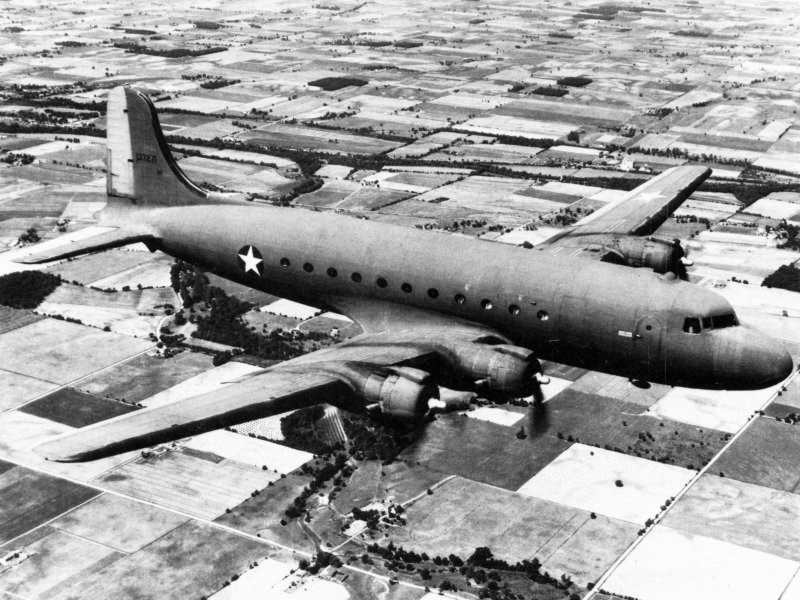
Navy transport crew reports glowing object over the North Atlantic

Crew of a Navy R5D flying from Keflavik to Argentia, including Lt. Graham Bethune, reported a glow that rose toward them and turned into a large circular object before leaving. Five aboard filed Air Force intelligence reports. The Air Force suggested the aurora or a meteor; Bethune disputed this.

Photo: USAAF, Public domain

Government

Wilbert Smith memo on flying saucers and U.S. secrecy

Canadian Department of Transport radio engineer Wilbert Smith sent a Top Secret memo proposing geomagnetic research tied to flying saucers. It relays what U.S. contacts reportedly told him, including that saucers were the most highly classified U.S. subject. The proposal led to Project Magnet.

Photo: Unknown photographer, Public domain